Tuesday, May 14, 2013

Climate Change

For as long as I can remember, scientists around the world have been researching the reasons behind our Earths change in climate. First, let's define the word climate. Climate is the average, or typical weather in a given area over a long period of time. This is not like weather, which is the state of the atmosphere on a given day (temperature, wind, precipitation, humidity, cloudiness, etc.).

So now that we know what climate change is I'm going to answer 3 questions that will tell you why climate change is occurring, and how it affects our society and our world...


Is there evidence that the climate is changing right now?

Yes. Scientists have been measuring the temperature of the Earth since around 1880, and if you look at the graph to the right, you can see the increase in temperature from 1880 to the year 2000. The increase in average temperature over the last 100 years around the world is 1.4°F (0.8°C). This may not seem like a lot, but according to the National Research Council, a mere 9°F drop in today's average temperature is the estimated difference in today's temperature and an Ice Age!!! This is proof that climate change is happening now, and has been happening for years.

Some think this change in climate is because of the sun, however evidence proves this is not true. Satellites have the ability to measure solar output from the sun, and according to satellite readings over a period of 30 years, records showed no increase in the sun's output. So who is to blame for the changing climate? 

What does evidence say about humans' roles in  the changing climate?

Greenhouse gases, which include carbon dioxide, water vapor, methane, and nitrous oxide, are a natural thing that helps keep the Earths surface warm. We of course need this in order to survive. However, when these greenhouse gases are greatly increased they act like a giant blanket on the Earth, trapping a more than needed amount of heat in the lower atmosphere.
What causes this great increase in greenhouse gases is people. Decades of research has proven that human actives has lead to an increase in the Earth's temperature. The burning of coal and oil, cutting down forests and the production of things such as cement add CO2 into the atmosphere. Land use also affects climate change because when an entire forest is wiped out, the ground it once shaded is now completely exposed to the sun for years to come. The burning of fossil fuel add to the methane in the atmosphere. Fertilizers used on farms add to nitrous oxide in the atmosphere. There are statistics, and long term studies supporting all of these things I just listed that prove human activities greatly contribute to the changing climate.

How is climate change likely to affect our society and our world? What will Earth be like in 50 years?

Scientists predict temperatures will continue to rise, and by the end of the century we will see an additional 60-90 days of temperatures reaching more than 100°F. In California we can expect much longer, hotter summers. Say goodbye to Fall and say hello to a shorter, much warmer winter.

Not only this, but scientists say that dryer places will get even drier, and wet places even wetter. This is
because with the heat, more water will evaporate from oceans, lakes and rivers, sucking the earth dry in some places and greatly increasing rainfall in others. This will lead to an increased risk of fires, and floods.

Snow covered areas will no longer exist. We already see much of it disappearing, eventually it will all be gone. This will wipe out many species of animals that live and depend on snow and ice such as the Polar Bears. And what about the rising sea level which is a result of the increased greenhouse gases? With the snow and ice melting this will cause the oceans to rise even faster.

With the changes in climate, animals will need to adapt. Some will move to more favorable locations, others will learn to adapt, and the ones that can't, such as Polar Bears, will become extinct. The animals that depend on the ones who move to different locations will need to find a new sources of food, move, or die off.

And what about food for humans? Do we really think livestock will learn to adapt to living on dry land in 110 degree weather for 4 months at a time? Or would we build special buildings with AC's to grow our livestock which will then GREATLY increase our price of meat. "If 5°C (9°F ) of global warming were to be reached, most regions of the world would experience yield losses, and global grain prices would potentially double". So even farming vegetables would become very expensive. The changing climate could possibly starve the world.


If we continue at the rate we're going, we're just setting up the world, and every living thing on it to die. If CO2 in the atmosphere continues to rise, in the next 50 years we will definitely see all of the above affects of climate change happening before our eyes.

......................

Even with all of this evidence, some people still deny the fact that the changing climate is a serious issue that needs to be addressed when it clearly is, and it needs to be addressed NOW! Here are some common reasons people don't see the changing climate as a crisis:
  • It costs too much money to fix
  • It's inconvenient to make the proper changes/people don't like changes
  • Some people believe that the natural greenhouse gases affect the earth more than we do
  • Other think it affects the future, not now so why worry?
  • A lot of people are too uneducated on the topic to care
  • Scientists do admit its happening, but their future predictions are not guaranteed so people are iffy
  • There are benefits to warming temperatures so why not let it happen?


Sources:
http://nas-sites.org/americasclimatechoices/

Monday, May 6, 2013

The Dangers of Household Chemicals


My all time favorite Febreze Air Effects scent is Cranberries & Frost... sounds refreshing right? Now, forget the name, and let me just list out 80+ chemicals found in Febreze that are linked to cancer, and other serious health problems... does it still sound refreshing?

Did you know some air fresheners use chemicals that reduce your ability to smell by coating the membranes of your nasal passages?

Household care products such as air fresheners, soap, shampoo, and cleaning products, and even what these products are packaged in, are loaded with potentially dangerous chemicals. In other words, in the comfort of our homes, we are surrounded by hundreds of chemicals that could easily cause great harm to our health.

Let's take a look at two common chemicals found in household care products;


According to the United States Department of Labor website, absorption of phenol through the skin of a human can lead to impairment of the central nervous system, as well as  liver and kidney damage.

A small amount of exposure can cause shock, convulsions, sever burns, muscle twitching, chemical burns, blindness, and can even lead to coma or death. The website also claims that a man, while working, spilled a strong solution of phenol all over his head, face, neck, and back and died just 10 minutes later.

Now, constant exposure to phenol has been known to cause vomiting, difficulty swallowing, constant headaches, sudden fainting, diarrhea, vertigo, darkening of the pigmentation of the skin, and more (osha.gov).

With 50% of all reported cases involving phenol resulting in death, why would we EVER want this chemical anywhere near our homes, even in small doses!

Here are some common household products that contain phenol:
Lysol
Pine-sol
Mouthwash
Some Acne Medications


The U.S. Environmental Protection Agency states that acute exposure to nitrobenzene results in methemogobinemia, a blood problem in which the amount of oxygen released to the tissues in your body is reduced. This leads to tiredness, dizziness and headaches, and at higher exposure can lead to bluish-gray skin, vision impairment, or coma. Other affects of chronic exposure include liver damage.

There is evidence that nitrobenzene also affects the male reproductive system. This was shown in tests done with rats where their testis significantly decreased in size, however, since this only occurred when the highest doses were given to the rats, and  no human evidence was found, it was not included in the list of risks given to the public. Methemogobinemia resulted at the lowest of doses which is why it is listed in the risks of the chemical.

Here are some common household products that contain nitrobenzene:
Pesticides
Paint
Floor and furniture polish

.............................................

In my bathroom, under the sink you can find a bottle of Listerine Mouthwash, which does in fact contain PHENOL.

Now, I very rarely use this mouthwash if ever, but my boyfriend uses it daily...

Think about it, mouthwash goes in your mouth where your skin is absorbing the chemicals, and then of course there's the few times you accidentally swallow a little bit. Think back to the effects of just a small amount of exposure to phenol and it's scary enough for me to never allow Listerine mouthwash in my house again!

...........................................


Well, there are a ton of homemade mouthwash recipes out there on the internet that will not contain the harmful chemicals store bought mouthwash contains. You just have to try them out and find the ones you like! Yes, it might take you a little longer to do your morning or nightly routine, but you're health makes it more than worth your time...

Here are the ones I plan to try out!


BAKING SODA Mouthwash
2 ounces of distilled water
1/4 tsp baking soda or sea salt
1 drop of pure peppermint oil
1 drop of tea tree oil

http://bathnbody.craftgossip.com/diy-chemical-free-mouthwash-recipes/2011/06/17/


MINT AND HONEY Mouthwash
1 cup of distilled water
1 tsp raw honey
1 tsp fresh lemon juice
2 drops peppermint essential oil
2 drops spearmint essential oil
1 drop anise seed oil

http://www.breathmd.com/homemade-mouthwash.php


 Sources:
http://www.sustainablebabysteps.com/febreze.html
http://www.osha.gov/SLTC/healthguidelines/phenol/recognition.html
http://www.epa.gov/ttnatw01/hlthef/nitroben.html
http://www.epa.gov/iris/subst/0079.htm

Tuesday, April 30, 2013

Minimizing Energy Use

Let's say for 24 hours you minimized your use of energy as much as possible. This means unplugging everything that is not in use (even if it's turned off it's still drawing energy!). This includes microwaves, laptops, TVs, lamps, and cell phone chargers. This also means driving as little as possible, using lights only when absolutely necessary and turning them off as soon as you leave the room, reducing your use of hot water (hang dry your clothes, take shorter showers!), and trying your best to find alternatives to warming or cooling your home.

Well, for my Environmental Science class that is exactly what I had to do. I had to save energy!
So here's what I did to reduce my use of energy for 24 hours...

 I started my morning by rinsing my face with cool water and brushing my teeth with very minimal water. Then I went around and unplugged everything that wasn't being used. A couple lamps, cell phone and computer chargers, 3 TVs, a microwave, and a few other electronics. This is when I told myself I would not use my cell phone for the rest of the day. I would only answer urgent calls. I was honestly happy about this part because I really hate being on the phone! Then I ate breakfast. After breakfast I opened up all the windows in my house to air it out and get some fresh air instead of turning on the fans or AC.

Now, usually I spend a majority of the morning catching up on TV shows (lazy I know but I'm being honest), but this morning, to save energy, I decided to take my dogs outside and I invited my mom to hang out with me. I enjoyed hours of conversation with my mom, bonding with my dog, and tanning out by the pool. Then I cleaned my pool and instead of turning on pool pump, I just used a net and cleaned the pool myself.

What shocks me, is that I actually got the courage to go into the pool! Since last summer I haven't gotten into my pool because I was thinking it's too cold, but this morning I said "why not try it?!". So I jumped in, my dog went in with me, I swam a few laps and had one of the best mornings I've had in a very long time.

Unfortunately this day I had work. To save some energy I did take a very fast, cool shower. I let my hair air dry as much as possible for finishing the drying process with a blow dryer (normally I would blow dry my hair completely wet), then instead of using a straightener on my hair I just threw it up in a pony tail. Then I left to work, and I wish I could say I rode my bike, but I work 20 miles away so driving is more convenient.

I work retail so there is a lot I cannot control in my store (a lot of things need to always be plugged in, lights always need to be on all day, and we have to keep the AC running to keep it cool for customers). However, at night I turned off all of the ACs, I unplugged our microwave, turned off all of the lights that I could turn off, and unplugged the TV (any little thing helps!). This day I also made sure to take my lunch so that I wouldn't have to drive anywhere else.

I didn't get off work until 9pm.
I went straight home. All of the windows were still open so it was cool in the house, I planned on just closing the windows when it got cold. Instead of plopping on the couch and watching TV I decided to for a jog with my dog, and so I did. Let me tell you, I use to run religiously and stopped about a year ago, so this was very exciting for me to be in the mood to run again!

When I got back I took a quick cold shower and got ready for bed. Then I unplugged the fish tank light since we were no longer using it. I normally end my night watching one episode of American Dad to fall asleep to, but tonight I decided to read instead. I only ready about 20 pages before falling asleep but it was so much better than staring at a TV screen.

..........................................................................

After the 24 hours I considered how I felt about the changes I made to conserve energy. I felt GREAT! Not only did I spend valuable time with my family, but I spent my entire morning before work enjoying the sun, my pool, and bonding time. I went to work thinking of ways to conserve energy there. I went home and did two things I use to enjoy so much but have recently told myself I'm "too busy" to do them anymore, I went for a jog, and I started reading a book I've been dying to read. 

Everything I did during those 24 hours are things I could do everyday. I want to do it for an entire month and compare the utility bills!

I don't think there was one thing I feel I couldn't give up. I love not having to text people back, I'd love to get up on my bike more often, and I love just being outdoors every chance I get. I've actually been meaning to plant a garden and why not do it in my spare time instead of watching TV?

.......................................................................

What else can I do besides giving up conveniences and technology to conserve energy?
  • Plant shade trees to reduce the heat in my home (I just got a free shade tree coupon!)
  • Change all of my light bulbs to energy effecient light bulbs
  • Buy only energy efficient appliances
  • Solar heat for water
  • Solar panels or wind turbines for energy
  • Install good insulation to reduce heat
  • Reduce air leakage around doors by using weather strips
  • Install low-flow showerheads
  • Buy LED lights for the holidays
  • Buy shades/curtains that reflect the sun
 Everything on this list could easily be accomplished in the near future given time and money, other than the solar panels and wind turbines (they are pricey and would require  long-term payments).

What would you be willing to give up?


Friday, March 22, 2013

The Frontier Project

Click the image to go to the official Frontier Project website.
As our second field trip we went to The Frontier Project in Rancho Cucamonga, California. Summed up it is a very sustainable building! First off all their outside stairs, made of recycled marble and glass chips, are made of polycrylate resin and cement based terazzo which makes them water resistant,  gives them a lifetime of 40-50 years, as well as gives them a very low burn rate. Their outside pavement absorbs water and actually more than half of the buildings water comes from this

The first room we went into the lights turned on once we walked into the room. The lights in the building only turn on when someone is in the room and only if their is not sufficient light coming from the outside. So, if their was a lot of light shining through the windows the lights would have not turned on at all... what a great way to conserve electricity right? Also, one thing I found very interesting was the carpet tile, something that is becoming more and more popular everyday. So let's say you stain the carpet. Instead of having to tear up the carpet and replace the whole thing, you can literally pull up that one tile and replace that one small area.

We were told by the tour guide that most of the stuff there stood by "Cradle to Cradle", meaning hardly anything goes to land mines because it's basically all refurbished and reused. In addition to all of this, the faucets are low flow, and the men's urinals are water free.

Here are a few other things the building had that made it so sustainable as well as some pictures:
  • Solar Chimneys - they heat up and pull heat out of the building
  • Air vents are on the floor where it's cooler instead of in the ceiling where it's hottest
  • Inside plants - used to purify the air inside
  • Plants line the staircase so that water soaks in and runs down the staircase to water plants below
  • There was a weather station that told when the sprinklers to turn on
  • Plants outside need very little watering


Thursday, March 21, 2013

The Lovely Gless Ranch


I absolutely love Gless Ranch. It's the place I love to go to buy oranges, grapefruits, mango, lemons, avocados, pumpkins for Halloween, and other things all at a great price, and all grown right behind the little shop or locally.

You get big bags at such a great price, and the trip is so much fun compared to a grocery store that you'll want to keep going back!


For this entry I must choose one food that I enjoy eating and research it! After talking up Gless Ranch I'm sure you are all assuming I'm going to choose oranges or some kind of fruit. Though I love my healthy foods I'm actually choosing something a little different that I also occasionally buy from Gless Ranch about once a year or so as a treat to myself...

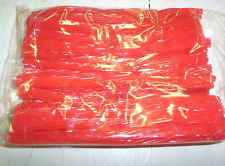
It's their old-fashioned licorice. The freshest, most delicious licorice I've ever had - and those who I've been able to get to try it also agree!

So it's not just your typical flavors that they have (because I'm not a fan of black and red licorice). They have cherry, apple, strawberry, blue raspberry, among other flavors, and my all time favorite watermelon... Yum!

Now let's do some research;
  • What are the ingredients?
    • Enriched wheat flour - this means most of the natural vitamins and minerals have been taken out so that the texture is finer and the shelf life is longer
    • Corn syrup, sugar, high fructose corn syrup
    • Water
    • Food starch modified (corn) - longer shelf life again as well as a hard coating for candy
    • Citric acid
    • Artificial flavor
    • Apple juice concentrate
    • Maltodextrin - an additive used as a thickener or filler
    • Salt
    • Soy lecithin - used to keep licorice together
    • Glycerine
    • Soy mono and diglycerides - used as coating and flour treatment agents
    • Malic acid - used to give food and candy a tart flavor
    • Palm oil
    • Ascorbic acid - also known as Vitamin C and used to preserve food
    • Artificial colors (FD&C Red #3 and FD&C Red #40) 
  • Where did the Licorice come from and who makes it?
    •  This Licorice comes from Torn & Glasser Inc. in Pomona, California, 40 minutes from Gless Ranch.
  •  How are the ingredients made?
    • Some are artificially made (like the colors, flavors), salt is natural and mined, high fructose corn syrup is genetically modified, apple juice concentrate is manufactured by a company, ascorbic acid can be either natural or synthetic, really every ingredient in this licorice has been made every way possible or is natural.
  • What are its environmental impacts?
    •  The packaging as pictured to the right is not environmentally friendly and therefore has an impact when disposed of. The process of cooking the ingredients and the conveyer used to cut the licorice all use energy which we all know also has impact on the environment. The 40 minute drive from Pomona to California also adds emission to the atmosphere.
  • What health effects might it cause?
    • Basically, these licorice are delicious but unhealthy (what a surprise).
    • Lets' start with the enriched wheat flour. Since enriched means that the natural vitamins and minerals are taken out it is less healthy (though they make is sound healthier). I actually read online that with those vitamins and minerals taken out your body absorbs the wheat differently, breaking it down faster than normal giving your body too much sugar at once. This can unfortunately lead to diabetes.
    • High fructose corn syrup is known for possibly being a reason for obesity.
    • Although some of the ingredients do no harm, there are really none that are beneficial to a person (besides the vitamin C but obviously it is not equivalent to taking a vitamin or drinking orange juice so we won't count that). Unfortunately some of the ingredients can actually do harm to a person if over-consumed, therefore I'm happy to say it's a treat I get for myself about once a year so I think I feel I'm not doing any harm to myself!

I'm very sad to say when I called Gless Ranch to find out who makes the licorice they told me that they no longer sell it because Torn & Glasser Inc. went out of business... I was devastated! Luckily however I found Kenny's Licorice on amazon that looks very similar to the ones from Gless Ranch. I ordered them so I'll update you all on how their taste compares!

UPDATE: Kenny's Licorice not only looks like the Torn & Glasser Licorice but it also does in fact taste just like it! It's just as fresh with the same flavors... downside is the only way to get it is online!

Sources:
http://institutefornaturalhealing.com/2007/08/the-hoax-of-enriched-wheat-flour/
http://www.bhawkindustries.com/blank?pageid=174&

Tuesday, March 19, 2013

Let's be honest here... 


How green, or sustainable is your campus? Probably not very, but I'm sure (or at least I hope) every campus is making an effort to be less impacting on the Earth! For this assignment I first had to decide what factors I would use to determine just how "green" my campus is. How a campus uses energy, commutes, and recycles are obvious factors, but here are others that I came up with;


There are campus sustainability efforts out there, however, most seem to be driven by profit more so than creating a smaller impact on the Earth. However, there are some campus out there who do want to overall be more "green", take Wake Forest University in Winston-Salem, North Carolina for example.

Every year this university takes part in the STARS program. STARS stands for the Sustainability Tracking, Assessment, and Rating System. According to the STARS website (https://stars.aashe.org/), the program is a "self-reporting framework for colleges and universities to measure their sustainability performance". Wake Forest University takes part in this program in order to track their progress each year to guide them in the right direction in becoming a sustainable campus.

The assessment is very detailed, covering everything from air travel and greenhouse emissions, to food purchasing and tray-less dining, to renewable energy. The campus is scored based on whether or not they are persuing the given "credit" on the assessement. For example, one "credit" is "LED Lighting", and since the university is persuing this, they recieved a score of 0.25/0.25. Kind of hard to understand so here's a screenshot of the actual report for Wake Forest in 2012;

 
You can check out this link to see the actual report from 2012:
https://stars.aashe.org/institutions/wake-forest-university-nc/report/2012-05-09/

So, if I could choose one of the factors I came up with above to assess at my campus I would choose: Are the buildings on campus LEED certified?. For those that do not know, LEED certified means that each building meets the standards of being sustainable. According to NRD.org, "The LEED green building rating system -- developed and administered by the U.S. Green Building Council... is designed to promote design and construction practices that increase profitability while reducing the negative environmental impacts of buildings and improving occupant health and well-being". Not only that, but there are benefits for being LEED certified! Buildings that do receive a Certified, Silver, Green, or Platinum LEED certificates get credits.

To start this assessment, I would first go to Dr. Edward Bush, Vice President of Student Servies and find out who it is I need to get permission from the assess each building. I would also write a detailed email to the RCC President, Dr. Cynthia Azari explaining to her why I am doing the assessment, as well as email her the results. I would then contact the Student Sustainability Collective and ask for their help in assessing each building.

In 2001, Emery built their first LEED certified builing, a "$95,000 project that paid for itself in less than a year through reduced energy bills". Why wouldn't we want to do this? Not only would we become a less environment impacting campus, we would also SAVE money. Most of the time the factors that keep a campus from becoming sustainable are lack of funds, lack of awareness, or lack of support from administrators. I'm pretty sure knowing the cost of becoming LEED certified would pay for itself in the first year, and continue to save us money afterwards would get administrators to be open to the idea!

Next, with the help of the Sustainability Collective I would research what the requirements are for being LEED certified and from there find out what standards the buildings meet and which they do not. I would then suggest getting assessed by the STARS AASHE assessment (that I mentioned above) to see where we stand in reference to electricty consumpion, etc. and to also show administrators just how poorly we are doing. I would have to get in touch with Dr. Cynthia Azari again and find out if this is okay to do. It would cost $1400 for the assessment, which I and the Student Sustainability club would have to raise. From there we would have the campus assessed, see what requirements are not met, and which ones are, and then pitch the idea to become LEED certified to the president of the school once again. This process (especially since I have to go through administrators and raise the money) would probably take a year or two.

It takes one person to make millions aware. Help make your campus sustainable. 


Monday, March 11, 2013

Crystal Cove State Park Tidepool Field Trip


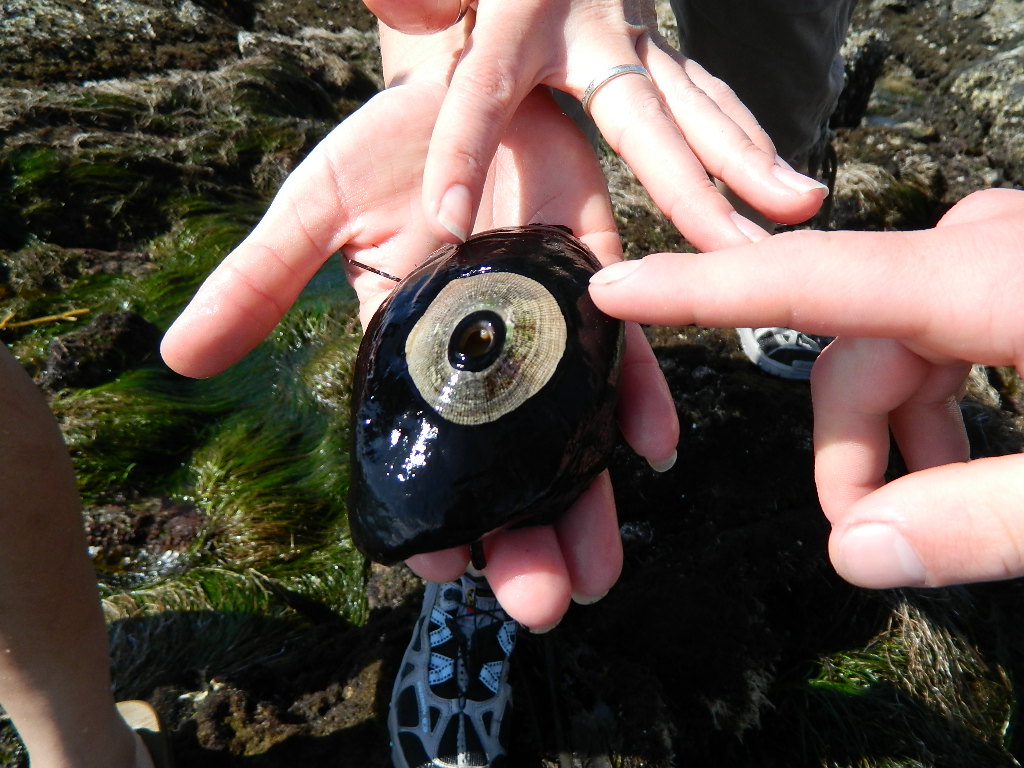
On March 9th we had the option of attending a field trip to the Crystal  Cove State Park in Laguna Beach and observe the life in the high, mid, and low-tide areas. Of course I went! (For those in the class who did not go please enjoy these pictures!) I went excited and hoping to see things I'd never seen on the beach before and thankfully I did! So please feel free to check out the pictures below and maybe consider visiting someday...


Here is the website for more information: http://www.crystalcovestatepark.com/